
The journal
How does a compression packing cube work? Practical steps and smart use
A clear, practical explainer on the extra zipper that flattens soft clothes, how to use it step-by-step, and when to choose compression cubes vs regular cubes or vacuum bags.
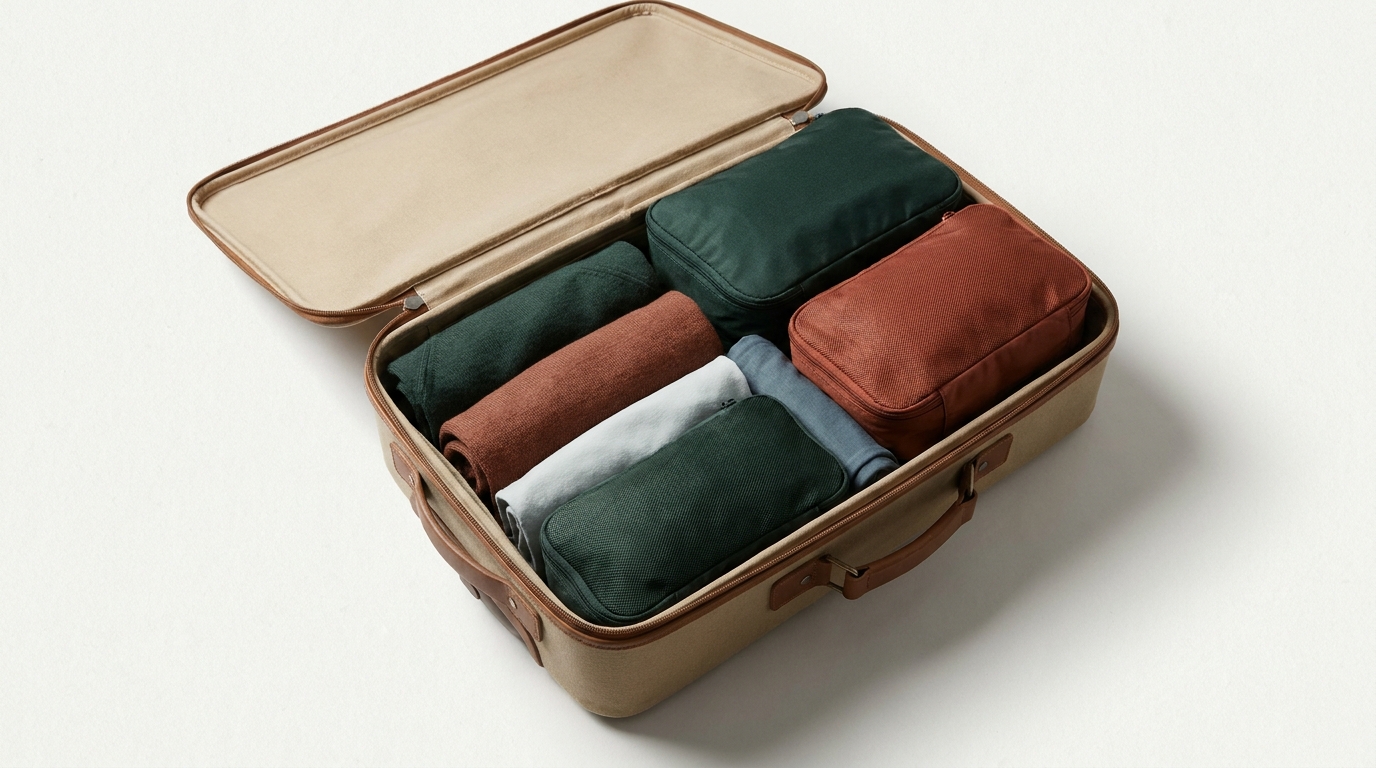
A compression packing cube works by adding a second zipper around the outside. After you close the main zipper, you close the compression zipper to draw the panels together and squeeze air from soft garments so the cube gets flatter. This reduces volume, not weight Travelpro: compression cubes.
What actually happens when you zip the compression layer
The compression zipper cinches the fabric panels so trapped air escapes from compressible layers like T-shirts, knits and sweaters. Rigid pieces such as shoes or toiletry bottles don’t yield, so they limit the effect and are better packed outside a compression cube Travelpro: what compresses best.
Compared with vacuum bags, compression cubes don’t need a pump and are easier to reopen and repack during a trip. Vacuum bags can compress bulky items more aggressively but are less convenient for frequent access and can increase creasing Tortuga comparison; Never Ending Voyage guide.
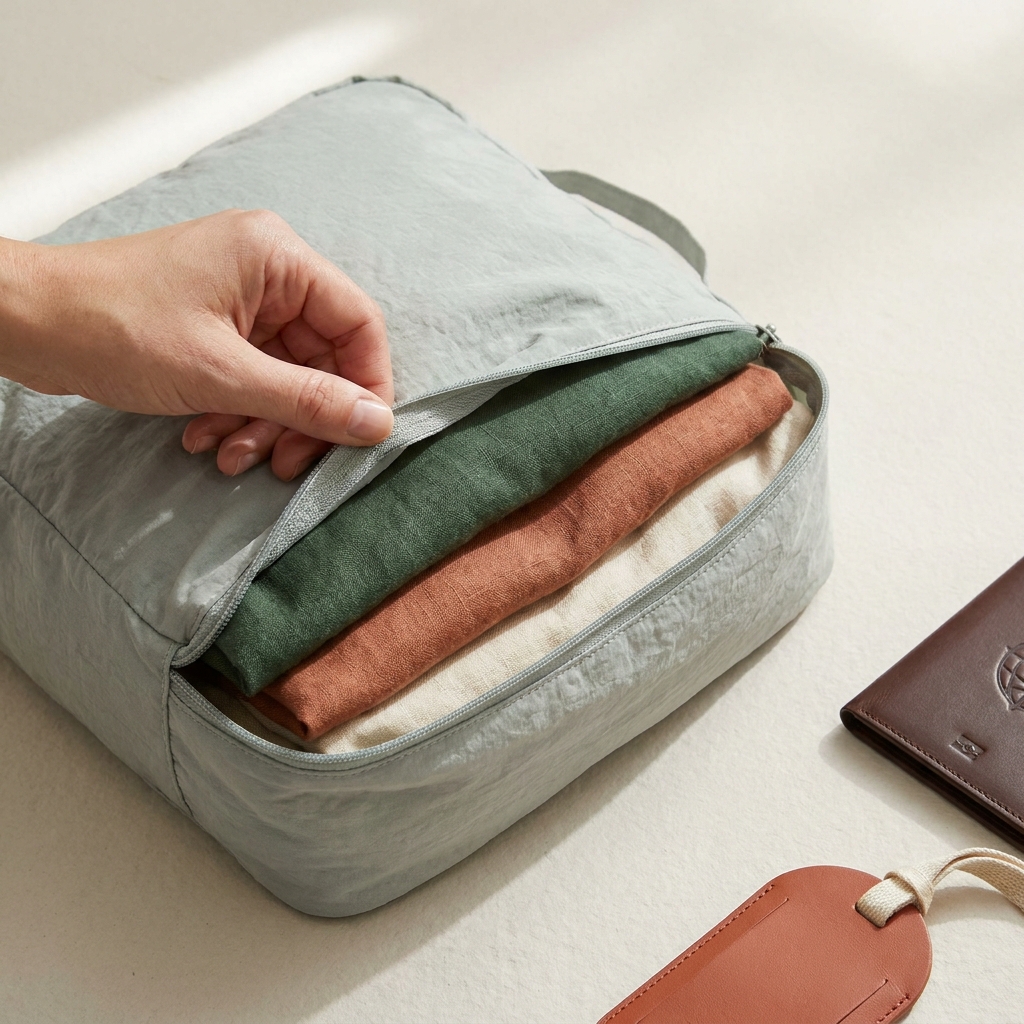
Step-by-step: pack and compress a cube
Use this routine, adjusting the load to the particular cube:
- Open the cube with the compression zipper unzipped. Load only soft items (for example, folded tees and underwear). Avoid hard or sharp items near seams Travelpro: item choice.
- Close the main zipper first. Smooth the stack with your hand to remove obvious air pockets Never Ending Voyage: packing method.
- Run the compression zipper slowly around the perimeter. If you feel resistance, stop, back up and rearrange or remove a layer rather than forcing it. For delicate or crease-prone garments, use a regular cube instead of compressing Travelpro: wrinkles and overstuffing.
A quick worked example
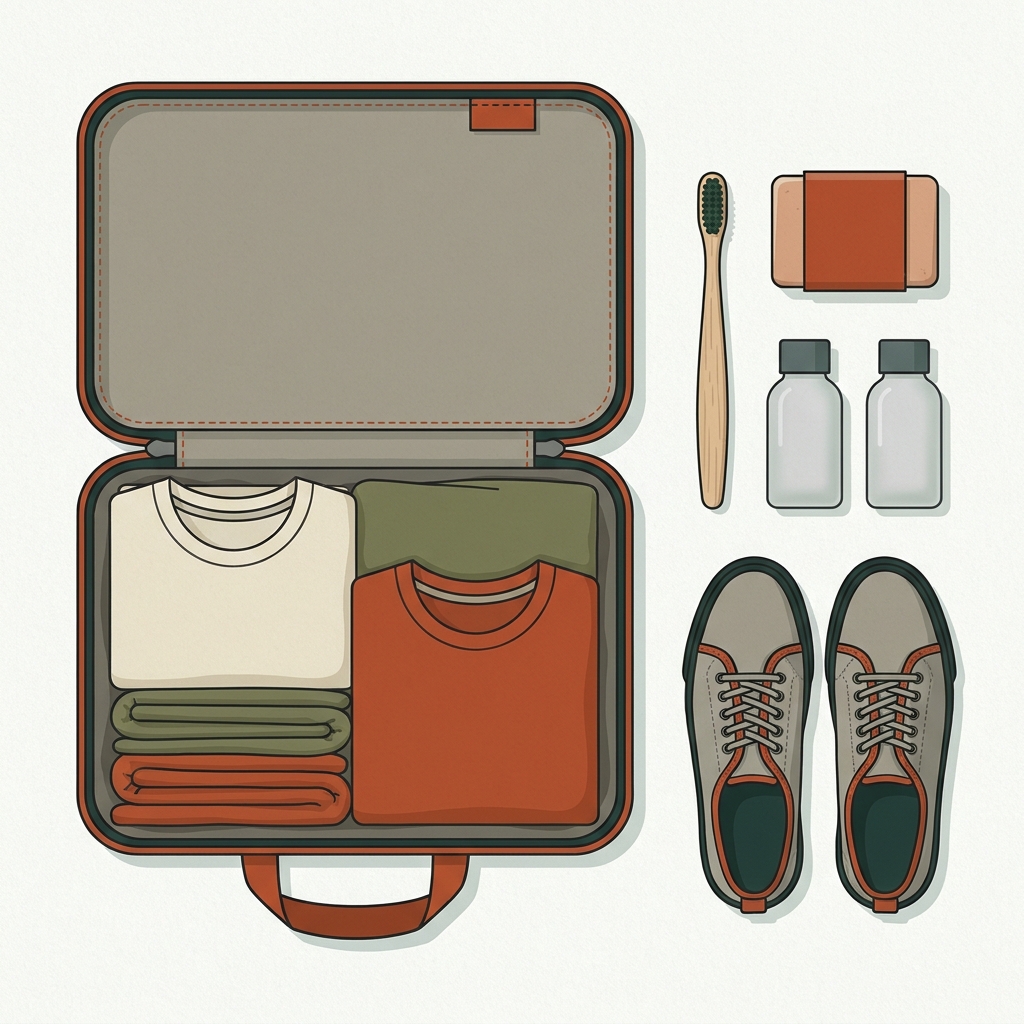
For an illustrative weekend packing list, choose a cube that fits without force: place 3 folded T-shirts on the bottom, add 2 pairs of underwear and 2 pairs of socks to fill gaps, close the main zipper, then compress slowly. Pack jeans and a light jacket flat in the suitcase outside the cube, and keep shoes in a separate bag. The count is an example, not a capacity rating for every medium cube; check the actual bundle and remaining luggage space Travelpro: mixing cube types.
Compression cubes vs regular cubes vs vacuum bags
- Compression packing cubes: organization plus space efficiency via a second zipper; best for soft clothing you won’t need to access constantly. They reduce volume but not weight Travelpro: volume vs weight.
- Regular packing cubes: primarily for organization and easy access. Ideal for crease-prone pieces or items you open daily Tortuga comparison.
- Vacuum-style compression bags: remove air through a design that may use a pump or rolling valve. Their effect and ease of repacking depend on the bag, contents and access you need Tortuga comparison; Never Ending Voyage on compression bags.
Common mistakes to avoid
- Overfilling the cube so the compression zipper needs force. If it jams or ripples, remove a layer before retrying Travelpro: avoid forcing zips.
- Mixing rigid and soft items in one cube. Hard items block panel collapse and defeat compression Travelpro: what compresses best.
- Expecting fewer wrinkles on dress clothes from compression. Use a standard cube or garment folder for pieces that crease easily Travelpro: wrinkle-prone items.
- Assuming compression makes a bag lighter. Compression only reduces bulk, not mass; still follow your airline’s weight rules Travelpro: volume vs weight.
Pack a compression cube the right way
Related reading from Cabin & Carry
FAQs
Do compression cubes make my suitcase lighter?
No. They reduce bulk so items fit more efficiently, but they do not change the bag’s weight Travelpro: volume vs weight.
Will compression wrinkle my clothes?
Compression increases pressure on fabric, which can crease delicate or structured garments. Use a standard cube or pack those items more loosely Travelpro: wrinkle-prone items.
When should I use a vacuum bag instead?
Consider an appropriate air-removal bag for suitable bulky layers you will not reopen often, but check the garment’s care and storage instructions. Do not assume every puffer tolerates prolonged tight compression Tortuga comparison; Never Ending Voyage: compression bags.

Related guides
Optional equipment for this guide
An ordinary cube organizes clothes; a compression model adds a separate compression step. Buy the function you actually need.
As an Amazon Associate I earn from qualifying purchases. These are researched options, not hands-on test results. Check the exact size or model, current price and availability on Amazon.
| Product option | Fit and limits to check | Retailer |
|---|---|---|
| Product imagePeak Design Packing Cube, medium Charcoal | A medium compression packing cube. Check its expanded and compressed dimensions, leave the compression zipper free of fabric and do not force the zip. Reduced bulk does not reduce baggage weight. | View on Amazon |